
The Evolution of Advertising on Facebook: From Banners to Augmented Reality

The Evolution of Advertising on Facebook: From Banners to Augmented Reality.Online advertising has undergone a remarkable transformation from the early days of simple static banners to today's immersive experiences. In this evolutionary journey, Facebook has played a crucial role by constantly adapting to changing consumer preferences and the rapid evolution of advertising technologies.
It may interest you: The Ethics of Advertising on Facebook, Responsible Practices for Advertisers
Video: Facebook Updates: Multiple Profiles, Ads, AI Assistants, and More
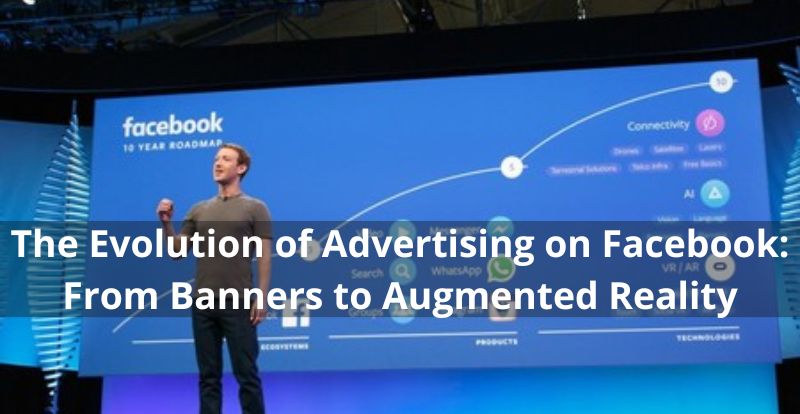
The Early Days of Banners on Facebook
When Facebook introduced advertising on its platform, banners were the norm. These ads, often static and unappealing, appeared on the sides of pages and faced the challenge of capturing attention amid the constant flow of content. However, over time, banners became less effective as users developed the ability to automatically ignore them.
Transition to Immersive Advertising
Faced with growing indifference from the public towards traditional ads, immersive advertising emerged as a revolutionary solution. In a world saturated with advertising messages, brands realized the need to stand out and connect more deeply with their audiences. The advent of immersive technologies such as 3D screens, augmented reality, and holograms marked a milestone in how brands present themselves on platforms like Facebook.
From 3D Screens to Augmented Reality: A Paradigm Shift
Immersive 3D screens have reinvented how brands communicate in urban environments. Cities like Tokyo and New York have adopted these visual giants projecting high-definition images with an optical effect that gives the illusion of three-dimensional movement. This approach has proven to be highly impactful, capturing the viewer's attention in ways conventional banners cannot.
Augmented reality, on the other hand, has taken interactivity to new heights. Transforming static posters into dynamic experiences, it allows users to actively engage through mobile devices. This approach not only surprises and entertains but also personalizes communication, adapting to user interactions and creating a deeper connection between the brand and the consumer.
Holograms: An Additional Dimension in Advertising
Holograms, three-dimensional projections of light in space, represent the cutting edge of immersive advertising. Unlike two-dimensional images, holograms add an additional dimension to how the audience perceives advertising content. Brands like Mercedes-Benz have used holographic pyramids in their campaigns to showcase specific features of their products, creating a unique experience beyond the limitations of traditional ads.
Benefits of Immersive Advertising for Businesses
Immersive advertising not only aims to capture attention but offers a range of key benefits for businesses adopting these technologies. From increased message retention to enhanced interactivity and a unique brand experience, these technologies are changing how brands connect with consumers.
Effective Attention Capture:
Immersive technologies stand out visually and sensorially, capturing attention more effectively than traditional methods.
Greater Message Retention:
The immersive experience makes it easier for the audience to better retain the advertising message, generating a long-term impact.
Enhanced Interactivity:
The interactive options offered by these technologies allow users to actively participate, breaking the barrier between viewer and advertiser.
Experience Personalization:
Augmented reality and other forms of immersive advertising often allow some degree of personalization, increasing the relevance of the message for the individual.
Higher User Engagement:
The immersive nature of these technologies encourages higher engagement, leading to more direct actions such as purchases or sharing information.
Innovation and Modernity:
Adopting immersive technologies reinforces a brand's image as innovative and modern, appealing to different market segments.
Application Flexibility:
These technologies can adapt to a wide variety of environments, from retail stores to live events, providing flexibility in implementation.
Enhanced Data Analysis:
The ability to collect data on how users interact with immersive advertising offers valuable insights for the adjustment and optimization of future campaigns.
Unique Brand Experience:
The combination of striking visualization and user interaction creates a unique brand experience that is challenging to replicate with more conventional advertising methods.
Impactful Examples of Immersive Advertising
Immersive 3D Outdoor Advertising by Nike: From March 21 to 27, 2022, Nike captivated Tokyo with a 3D advertising billboard to celebrate Air Max Day. The iconic orange box of the brand opened to reveal different styles of Air Max, making an impact with 200 million global impressions.
Mercedes-Benz Holographic Outdoor Advertising: Mercedes-Benz, in collaboration with JCDecaux, incorporated holographic pyramids in outdoor media to showcase the "Blind Spot Assistance" feature of their cars. This not only effectively communicated the feature but also provided a unique experience for onlookers.
Redefining the Brand-Consumer Connection
Immersive advertising has marked a milestone in the evolution of advertising on Facebook and in the digital world at large. From 3D screens that capture immediate attention to augmented reality that enables dynamic interaction and holograms that create unforgettable experiences, these technologies have redefined how brands communicate.
In this ever-changing landscape, adapting to and adopting these innovative tools positions brands at the forefront, leaving a lasting impression on the minds and hearts of their audience. As technology continues to advance, we are likely to see more evolutions and adaptations of these formats, but one thing is clear: immersive advertising has arrived to stay, offering a more meaningful and memorable experience for the modern consumer.
Si quieres conocer otros artículos parecidos a The Evolution of Advertising on Facebook: From Banners to Augmented Reality puedes visitar la categoría Facebook.
Leave a Reply